
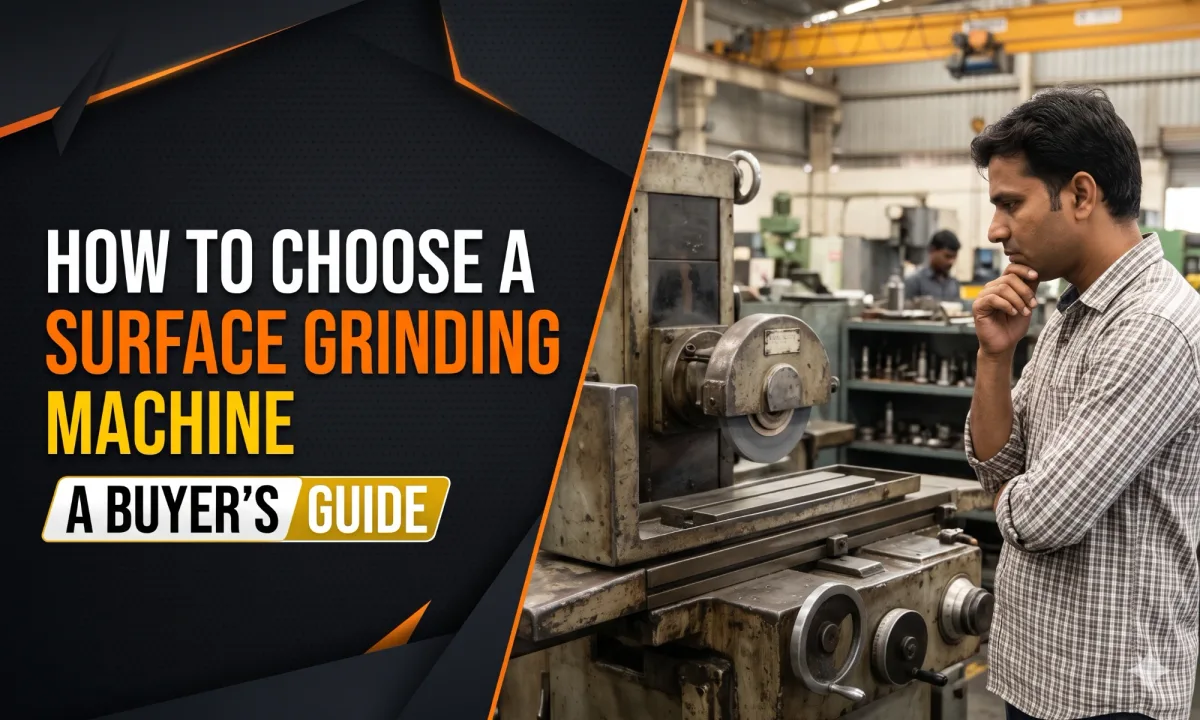
Choosing the right surface grinding machine comes down to matching the machine to your parts, tolerances, and output — not just buying the biggest or cheapest option. Here’s how to think it through.
1. Start with the part
- Shape & size: Long, flat parts and dies suit a reciprocating grinder. Lots of small flat parts, or large round parts, suit a rotary grinder. Parts that need both faces flat and parallel suit a double-disc grinder.
- Material & hardness: Harder materials and finer finishes influence wheel choice, spindle power, and rigidity.
- Tolerance & finish: The tighter your flatness, parallelism, and surface-finish targets, the more rigidity and control you need.
2. Match the machine type
| If you need… | Consider |
|---|---|
| High-volume flat grinding of many parts | Rotary surface grinder |
| Versatile tool-room & die work | Reciprocating surface grinder (horizontal or vertical spindle) |
| Both faces ground in one pass, high volume | Double-disc grinder |
3. Decide on controls: CNC vs PLC
- CNC (Siemens or Fanuc) — best for repeatable, automated production and traceability.
- PLC — a dependable, cost-effective choice for simpler or lower-volume operations.
Choosing the right control is as important as the machine itself — read about the benefits of CNC surface grinding for production work.
4. Think beyond the machine
- Installation, commissioning, and operator training — so the machine runs to spec from day one.
- Spare parts and service — genuine parts and responsive support protect uptime.
- Supplier track record — a manufacturer that has built grinders for decades understands real production conditions.
Talk to an application engineer
The fastest way to get it right is to share your component, material, and tolerances with an engineer who can recommend the exact machine, wheel, and setup.
Alex Machine Tools has manufactured surface grinding machines since 1964, serving customers across India and 30+ countries. Contact our engineers for a recommendation, or explore the full product range.